



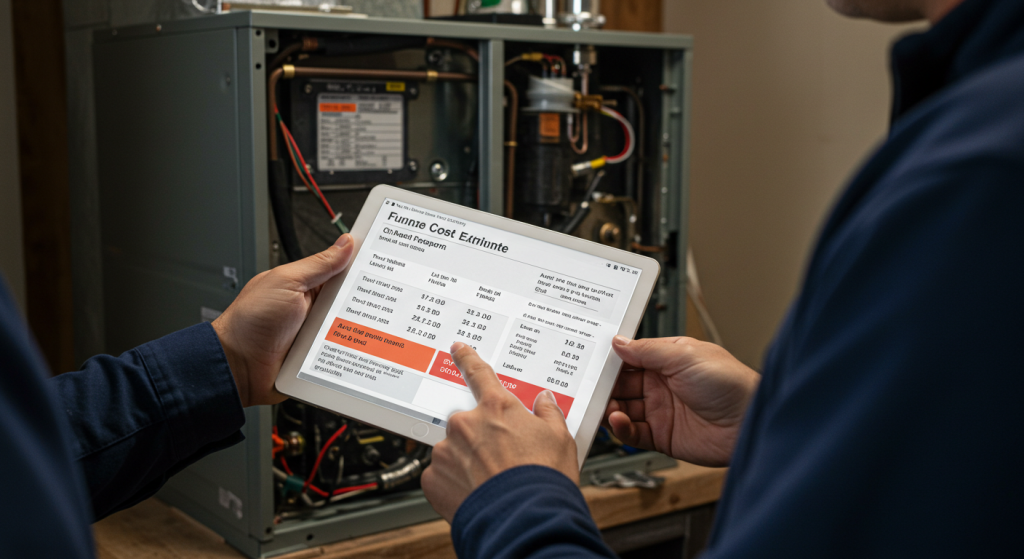
Why Knowing Furnace Repair Costs Matters
Furnace repairs can be expensive, and it’s natural to want to understand what you’re paying for. Whether it’s a small fix or a major repair, knowing what to expect in terms of cost can help you make better decisions and avoid surprises. This breakdown will help you understand the factors that affect furnace repair costs and provide you with a rough estimate of what you should expect to pay for different types of services.
Furnace Repair Costs Overview
On average, furnace repair costs can vary widely, with more complex issues driving up the price. Here’s a general idea of what different types of repairs may involve:
1. Minor Repairs
Minor repairs, such as replacing a clogged air filter, a faulty thermostat, or addressing pilot light issues, are usually affordable and quick fixes. These repairs typically don’t involve large part replacements and can be completed in a short amount of time.
2. Moderate Repairs
For repairs that are more involved, such as fixing a malfunctioning blower motor or replacing a faulty ignitor, the cost tends to rise. These tasks may require more time to complete, and sometimes special parts need to be ordered.
3. Major Repairs
Major furnace repairs, such as replacing a cracked heat exchanger or a broken gas valve, tend to be significantly more expensive. These repairs are often more complex, requiring specialized tools and parts. In certain cases, the cost of the repair could approach or even exceed the cost of a full furnace replacement.
Factors That Affect Furnace Repair Costs
1. Type of Furnace
Gas furnaces tend to be more expensive to repair than electric furnaces, primarily due to the complexity of the components and safety concerns. Oil furnaces also have different repair needs and may require specific parts that can be more expensive to source.
2. Age of the Furnace
Older furnaces may require more frequent and costly repairs due to wear and tear. If your furnace is over 15 years old, it may be more cost-effective in the long run to replace it rather than continue paying for repairs.
3. Emergency Repairs
If your furnace breaks down during the off-hours, like late at night or on the weekend, you may incur additional emergency service fees. These fees can increase the total repair cost, so it’s always a good idea to schedule regular maintenance to avoid emergency breakdowns.
How to Save Money on Furnace Repairs
1. Schedule Regular Maintenance
Routine furnace maintenance is one of the best ways to save money on repairs. Regular inspections and tune-ups can help detect small issues before they become major problems. This proactive approach can prevent expensive emergency repairs and extend the life of your furnace.
2. Consider a Maintenance Plan
Many HVAC companies offer maintenance plans that provide regular check-ups and discounted repair services. These plans can be an affordable way to keep your furnace in top condition without paying for individual service visits.
3. Compare Quotes
When you need a major repair, it’s worth getting quotes from multiple furnace repair companies. While the cheapest option isn’t always the best, comparing prices can give you a better understanding of what’s reasonable and ensure that you’re getting a fair deal.
Worried about furnace repair costs? Don’t let high prices catch you by surprise.
👉 Contact Onsite Heating & Cooling today for an honest and transparent estimate on furnace repair services.